


Dropbox: Secure Cloud Storage
Dropbox, Inc.
I use Dropbox as a working folder rather than merely a place to park old files. Its most valuable capability, in my experience, is the way it keeps the same material available across devices while letting me share it with other people. That sounds simple, but it changes how I handle photos, documents, school projects, and files that move between a phone and a computer. Instead of asking which device holds the latest copy, I can work from one cloud-based folder and return to it wherever I am.
Dropbox is a free productivity app from Dropbox, Inc., available for Android and iOS. It is rated for Everyone, and its long presence in the mobile market makes it feel familiar even if you have never used it before. The app has an average rating of 4.4 from around 2.3 million ratings, with more than a billion installs. Those figures do not automatically make it the right choice, but they do reflect how broadly the service is used.
My review focuses on that central capability: keeping files synchronized and shareable without forcing me to manage separate copies manually. The experience is not perfect, especially if you expect unlimited storage or a complete replacement for a desktop file system. Still, for people who regularly move between devices or need a dependable way to send folders and documents, it remains one of the easier services to understand.
Related News

How Google Calendar is Transforming Mobile Productivity

Microsoft Word: The Mobile Productivity Powerhouse
One working copy instead of several scattered versions
The real benefit of cloud synchronization
The practical advantage is not simply that a file lives online. The useful part is that I can place a document, image, or video in Dropbox and then reach that same item from another device. When I edit a file on a computer and later open the app on my phone, I do not need to email the document to myself or remember which messaging conversation contains the latest attachment.
This is especially helpful for files that change throughout the day. I might begin notes on a laptop, check them on a phone while traveling, and then continue on a tablet. The app gives me a central place to look, which reduces the small decisions that usually cause mistakes. I am less likely to edit an outdated copy or send an unfinished version simply because it was the one saved locally.
Related News

Why WhatsApp Messenger Still Makes Everyday Communication Feel Easy

Jurassic World: The Game Is the Better Dino Tycoon for Strategic Players

Threads in Real Life: Who Should Join, Lurk, or Leave

How SHEIN Turned Shopping Into an Endless Content Feed

How to Make Fortnite Feel Smarter on Mobile

Should You Switch to Microsoft Outlook on Mobile?
Dropbox also makes sharing feel connected to storage rather than treated as a separate task. I can organize a folder first, then share what belongs in it instead of repeatedly selecting individual attachments. That approach is useful for a group assignment, a collection of travel photos, or a set of documents for a family member. The recipient gets access to the material I intended to share, while I retain one organized source.
Why this matters more on a phone
Mobile storage is convenient, but it is also easy to fill with duplicate photos, downloaded documents, and files received through different apps. Dropbox gives me a deliberate destination for items I want to keep available without leaving every copy in the phone’s local storage. I still need to pay attention to what I keep offline, but the arrangement is cleaner than treating the device’s download folder as a permanent archive.
The photo and video side is useful when I want memories to be accessible beyond one handset. I can upload images from a phone and later review them elsewhere, which is more comfortable than sorting a large collection on a small screen. The app’s focus on keeping photos and videos secure is therefore meaningful in everyday use, although I would still keep an additional backup for anything irreplaceable.
Gallery
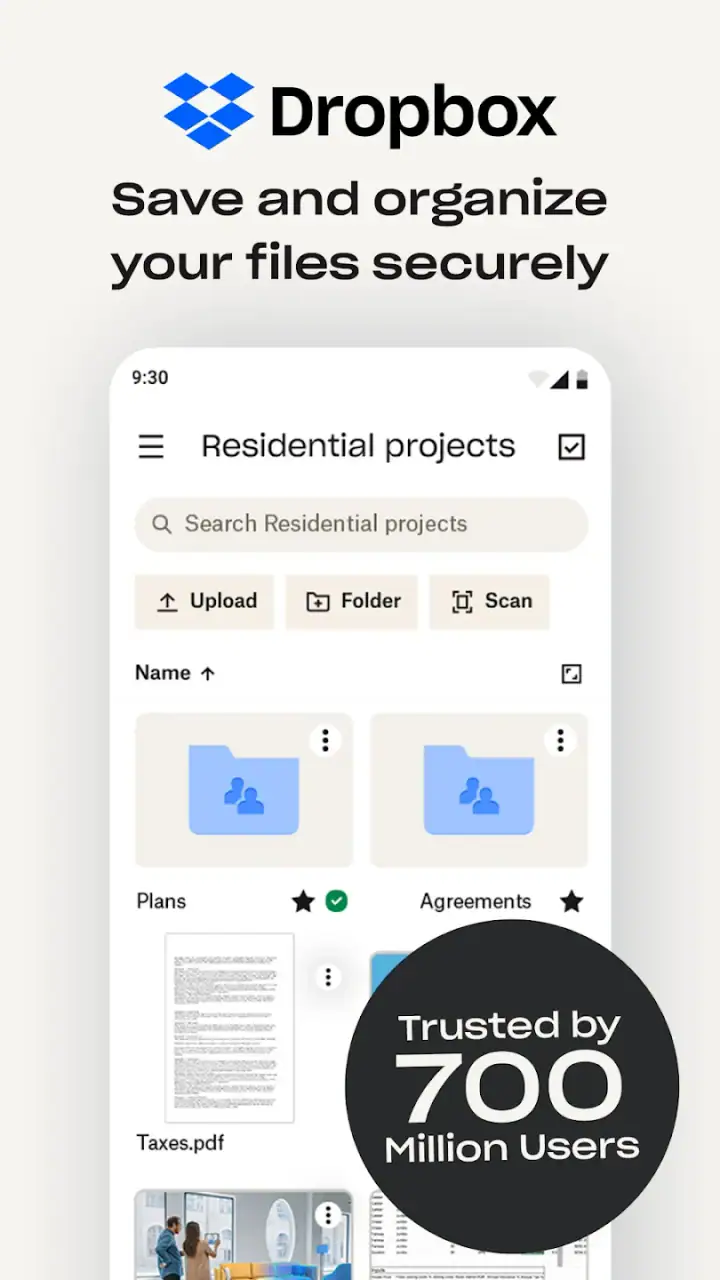
One detail I appreciate is the separation between temporary sharing and long-term organization. A file can be sent when needed, but I can also keep it inside a named folder with related material. That distinction prevents my cloud space from becoming a pile of disconnected attachments. It takes a little discipline at the beginning, yet the payoff comes later when I need to find a particular item quickly.
What the app is really replacing
Dropbox is not only replacing a USB drive. In practice, it replaces several habits at once: sending files to myself, carrying multiple copies, asking someone to resend an attachment, and searching through chat histories for a document. The biggest improvement appears when a file is used by more than one person or more than one device.
It is less transformative if you only store a few documents and never switch devices. Someone who already has a simple local folder and rarely shares files may find cloud storage unnecessary. The app earns its place when access, organization, and sharing are recurring problems rather than occasional inconveniences.
How I use it in practice
A sensible setup on the first day
I would begin with a small folder structure instead of uploading everything immediately. Separate folders for personal documents, current projects, photos, and files shared with others make the service easier to live with. The goal is not to reproduce every folder on a computer. It is to create a short list of places that I will actually revisit.
For active work, I prefer folders named after the project rather than vague labels such as “new” or “miscellaneous.” Inside, I keep the working document alongside supporting images or reference files. This is one of the less obvious strengths of a cloud folder: the context travels with the main file. When I open the project from another device, I am not reconstructing the surrounding material from memory.
I also recommend treating the mobile app as a review and access tool, not automatically as the best place for every editing task. Reading a document, showing a photo, checking a PDF, or sending a file works well on a phone. Detailed editing, bulk organization, and naming many files are usually more comfortable on a larger screen. The service connects those situations, but it does not make every device equally suitable for every job.
A realistic everyday workflow
Imagine I am preparing a presentation with two other people. I create one project folder, place the current presentation and source images inside it, and share that folder rather than sending separate attachments. When one person adds a new image, it belongs beside the presentation instead of disappearing into a private message thread. If I later need to check the material from my phone, I open the same project space rather than hunting for the latest email.
This workflow also exposes an important habit: naming files clearly. Cloud access does not fix confusing names. I would use labels that show the subject and status, such as a draft or final version, while avoiding a long chain of files called “final,” “final new,” and “final latest.” Dropbox makes the files easier to reach; it does not decide which one a team should trust.
For family photos, I would create a folder for a particular event and upload selected images rather than every accidental screenshot. That keeps sharing manageable and makes the collection more pleasant to browse. For paperwork, I would scan or save only documents I expect to need again, then place them in folders that reflect real tasks such as travel, school, or household records.
Sharing without losing control of the folder
Sharing is strongest when I think about the recipient before creating the link or invitation. Someone who only needs to view a file should not necessarily receive an entire project folder. Someone collaborating on a set of documents may need the folder context. Choosing the smallest useful collection reduces confusion and limits accidental exposure.
I would also check the folder contents before sharing. Old drafts, private notes, and unrelated images can remain beside the intended material if I am careless. This is a small but important trade-off of folder-based sharing: organization makes collaboration easier, but a poorly maintained folder can reveal more than expected.
The app is useful for sending large collections that are awkward as email attachments, but the recipient’s experience still depends on how clearly the files are arranged. A single well-named folder is more helpful than a crowded collection of unnamed items. In my experience, thoughtful preparation matters as much as the sharing function itself.
Keeping phone storage under control
Cloud storage is not the same as automatically removing every local copy. I would decide which files need offline access and which can remain available through the app when connected. This distinction matters if the phone has limited space or if I am storing many videos. Keeping everything downloaded defeats part of the reason to use cloud storage in the first place.
At the same time, I would not rely on one cloud folder as the only home for irreplaceable memories. A lost account, an accidental deletion, or a mistake during organization can affect access. Dropbox can be an important part of a backup routine, but a second copy in another location is a sensible precaution for family photos, legal records, and other files that cannot be recreated.
The situation where Dropbox makes the biggest difference
For people moving between phone and computer
The clearest use case is someone who works across devices every day. A student may photograph handwritten notes, save research documents on a computer, and need both while studying away from home. A freelancer may receive images on a phone, organize them in a project folder, and later prepare the finished work on a laptop. A parent may want household documents available without carrying a physical folder.
In each case, the benefit comes from continuity. The user does not have to predict in advance which device will be needed later. Files are placed in a shared working space, and the next device becomes a window into that space. That is more valuable than a simple upload button because it changes the workflow before the file is needed.
For small collaborations
Dropbox is particularly comfortable for small groups that need shared material but do not want to build a complicated project-management system. A folder can hold a brief, images, drafts, and reference documents. People can return to the same location instead of creating a new attachment every time something changes.
I would not confuse this with a full communication or task-tracking platform. The folder can organize the files, but it does not replace clear messages about responsibilities, deadlines, or decisions. For a small project, that division is fine: use Dropbox for the material and another tool for conversation when necessary.
For photo and video collections
People who take many photos will understand the appeal quickly. A phone is excellent for capturing memories but less ideal for long-term sorting. Uploading selected images to named folders gives me a more stable way to revisit them, show them on another screen, or share an event with relatives.
Videos require more patience because they consume more space and may take longer to upload. I would use a reliable connection when moving a large collection and avoid assuming that every file needs to be available offline. The convenience is real, but it is tied to storage planning and upload habits.
The trade-offs I would consider before relying on it
Free access does not mean unlimited space
The app itself is free to download and use, but in-app purchases range from $5.99 to $299.99 per item. That range is a reminder to think about capacity before treating Dropbox as an unlimited photo vault. A small collection of documents may fit comfortably, while years of high-resolution photos and videos can change the equation quickly.
I would start by deciding what deserves cloud space. Active work, important documents, and selected memories are better candidates than duplicate downloads or files that can easily be obtained again. If the free allowance becomes restrictive, the sensible choice is to compare the cost and storage terms with alternatives rather than upgrading automatically.
It depends on a good connection for the smoothest experience
Cloud access is convenient when the network is available, but it can feel less immediate in places with poor connectivity. Before traveling, I would identify the documents or images I may need and make sure they are accessible in advance. Waiting until an airport, train, or remote location is not a reliable preparation strategy.
This is also why Dropbox should not be viewed as a complete substitute for local files. For a presentation, boarding document, or emergency contact list, I prefer to keep the necessary item available on the device as well. The cloud copy provides flexibility; the local copy provides independence when the connection fails.
Organization remains the user’s responsibility
Dropbox can make a messy collection easier to reach from several devices, but it cannot make a messy collection understandable. If I upload every image, duplicate, and draft without a naming system, the same confusion follows me everywhere. The app rewards simple routines: consistent folder names, occasional cleanup, and clear sharing boundaries.
There is also a psychological trade-off. Because files feel safely stored online, it is easy to postpone sorting them forever. I have found that a short cleanup session after a project or trip is more effective than attempting a massive archive later. The service supports organization, but it does not remove the need for decisions.
How it compares with familiar alternatives
Compared with keeping files only on a phone or computer, Dropbox is much better for access from multiple devices and for sharing a group of related items. Local storage remains faster and more dependable when I am offline, so I use it for files that must be available immediately. The two approaches work best together rather than as strict replacements.
Compared with sending attachments through email or messaging apps, Dropbox is better suited to large collections and changing projects. Email is still convenient for a single finished document, especially when the recipient does not need an ongoing folder. Dropbox becomes more useful when several files belong together or when the material will be updated.
Compared with a photo-first backup service, Dropbox feels more general-purpose. I can use the same organizational idea for documents, images, and project folders rather than separating personal media from work material. A dedicated photo service may be a better fit for someone who wants automatic photo management above everything else. Dropbox suits me more when photos are only one part of a broader file workflow.
Compared with a platform already built into a particular device ecosystem, Dropbox can be appealing when my devices come from different manufacturers or when other people in a project use different systems. The trade-off is that another service may feel more integrated for users who stay entirely within one ecosystem. The best choice depends less on popularity than on where the rest of your files and collaborators already live.
Who gets the most value from this app
People I would recommend it to
I would recommend Dropbox to students, freelancers, families, and small teams that regularly switch between a phone and a computer. It is also a good match for anyone who wants a straightforward shared folder instead of repeatedly sending attachments. If your main frustration is “I know the file exists, but it is on the wrong device,” this app addresses that problem directly.
It is useful for people who prefer visible folders over a complicated database. The structure is easy to explain to another person: create a folder, place the related files inside, and share that folder when appropriate. That simplicity makes it practical for relatives or collaborators who are not interested in learning a specialized system.
The current version is 460.2.8, and the app supports operating systems from version 9 onward. That broad compatibility makes it easier to include older devices in a shared workflow, although the actual experience can still depend on the phone’s storage, speed, and connection.
People who should choose something else
I would look elsewhere if my only goal were automatic photo backup with minimal folder management. A photo-centered service may provide a more natural browsing experience for someone who never stores documents or project files. I would also compare alternatives carefully if I need a large archive and want to avoid paid storage.
Dropbox is not the ideal answer for someone who works entirely offline, dislikes cloud accounts, or needs a highly specialized collaboration environment with extensive task controls. It can hold the files for a project, but it does not replace every tool used to plan and discuss that project.
I would also skip it as my sole backup for irreplaceable material. Keeping a second copy is a better approach, whether that copy is on another storage device or in another service. Convenience should not be mistaken for complete protection.
My final recommendation
After using it as a shared working space, I see Dropbox as a practical bridge between devices rather than a magic archive. Its strongest quality is the reduction of small, repeated hassles: searching for the latest attachment, carrying a drive, or discovering that an important document is trapped on another machine.
The best results come from using it selectively. Build a folder structure you will maintain, share folders with care, keep essential files available offline, and watch how quickly photos and videos consume space. If those habits fit the way you work, the free app is an easy recommendation for everyday file access and collaboration.
For me, the deciding question is simple: do I need the same files in more than one place? If the answer is yes, Dropbox earns a useful role. If the answer is no, local storage or a more specialized photo service may be simpler. Its value is not in storing everything indiscriminately; it is in making the right files follow me when my device, location, or collaborator changes.
FAQs for Dropbox: Secure Cloud Storage
What is Dropbox and how does it work?
Dropbox is a cloud-based storage service that allows you to store and access files online. It syncs your files across all your devices, so you can access them anywhere with an internet connection. Simply upload files from your computer or mobile device, and they will be available almost instantly on any other device linked to your account.
Is Dropbox secure for storing sensitive information?
Dropbox uses advanced encryption methods both at rest and in transit to protect your data. However, for highly sensitive information, consider using additional encryption tools before uploading files. It's also important to use strong passwords and enable two-factor authentication to enhance your account security.
How much storage space does Dropbox offer?
Dropbox offers several plans with varying storage capacities. The free Basic plan provides 2 GB of space, which is suitable for light usage. For more extensive storage needs, Dropbox Plus provides 2 TB, and Dropbox Professional offers 3 TB. Business plans also offer scalable storage options depending on company requirements.
Can I use Dropbox offline?
Yes, Dropbox allows you to access files offline on both desktop and mobile devices. You need to mark files or folders as 'Available Offline' on your mobile device, or ensure files are synced to your computer. This functionality lets you view and edit files without an internet connection, with changes syncing once you're back online.
How is Dropbox different from other cloud storage services?
Dropbox is known for its user-friendly interface and reliable syncing capabilities. It integrates seamlessly with numerous third-party applications and platforms, enhancing productivity. While other services like Google Drive or OneDrive offer similar features, Dropbox’s focus on simplicity and collaboration tools makes it a preferred choice for many users.
Pros
- Easy file synchronization across devices.
- Generous free storage for new users.
- Intuitive and user-friendly interface.
- Strong security features with encryption.
- Supports multiple file types and formats.
Cons
- Limited offline access without premium.
- Free version has limited storage.
- File sharing can be slow at times.
- No advanced search for free users.
- Some features require constant internet.


